
CURATED VENDOR SPACES
Artisans & Oracles Marketplace
Celebrating Art, Magic, Creativity, and Community- A family friendly event with makers,
artists, spiritual practitioners and unique small businesses across Connecticut.



Join Us at our Next Event!
October 11th, 2026 11am-5pm
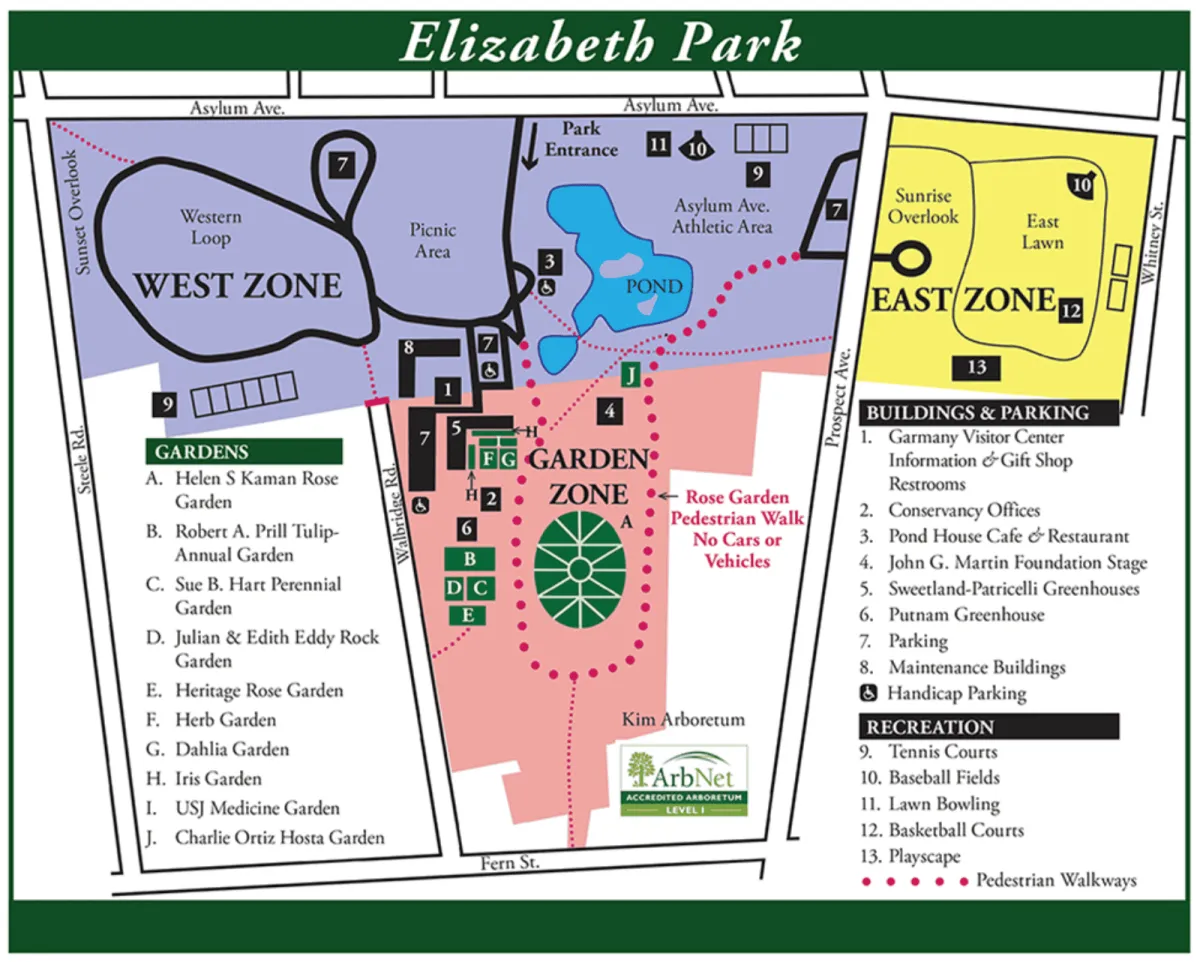
East Lawn Elizabeth Park, Hartford, CT
Join us for guided meditation, soothing sound bowl sessions, playful face painting, beautiful henna designs, delicious food from local trucks, and hands-on arts and crafts. This family-friendly celebration brings together artisans, healers, and curious minds—come connect, create, and relax with live demonstrations, performances, and marketplace finds. Bring friends and family and be part of the magic!
This event is free to attend!
FEATURED PARTNERS
Vendor Showcase
Discover the incredible artisans, spiritual guides, food creators, and wellness services joining us this year. Search and filter to find exactly what you're looking for.
Over 20+ partners joining us for the weekend.
Key Themes and Concepts in Science Supporting Spiritual Concepts
The following concepts, themes, and terminology is valuable for the comprehension of the impact of our perspectives on the nature of reality itself.
Cognitive Dissonance – The Mental Tug-of-War Between Conflicting Beliefs
Cognitive dissonance occurs when a person holds two conflicting beliefs, values, or attitudes, leading to mental discomfort. This discomfort often triggers a subconscious attempt to reduce the contradiction by changing beliefs, justifying behaviors, or ignoring contradictory information.
📌 Example: A person who believes that they are destined to struggle financially may feel cognitive dissonance when an opportunity for financial success arises. Instead of embracing the opportunity, they might dismiss it as a "scam" or tell themselves they are "not ready," because accepting it would conflict with their deeply held belief in struggle.
Confirmation Bias – Why We See What We Expect to See
Confirmation bias is the tendency to seek, interpret, and remember information that supports pre-existing beliefs while ignoring or discounting contradictory evidence. This reinforces mental patterns and makes it difficult to change perspectives.
📌 Example: Someone who believes the world is unfair might constantly notice examples of injustice while overlooking acts of kindness, generosity, or progress. Even if opportunities arise, they may dismiss them as flukes or exceptions rather than signs of change.
Neuroplasticity – Rewiring the Brain for Change
Neuroplasticity is the brain’s ability to form new neural connections and rewire itself based on experience, learning, and conscious effort. This means that with intentional practice, we can reshape our thoughts, habits, and behaviors.
📌 Example: If a person repeatedly affirms, "I am worthy of abundance" while taking aligned action, over time, their brain will create new pathways that reinforce this belief. This can shift their mindset from lack to empowerment, altering their decisions and outcomes.
Reticular Activating System (RAS) – The Brain’s Filter for Reality
The RAS is a network of neurons in the brainstem that acts as a filter, determining what information reaches our conscious awareness. It prioritizes information based on what we focus on and believe is important.
📌 Example: If you decide to buy a red car, suddenly, you start noticing red cars everywhere. In the same way, if you focus on opportunities and solutions, your brain will start recognizing them more often in your environment.
Neural Predictive Coding – How the Brain Shapes Reality Based on Expectations
Neural predictive coding suggests that the brain constantly predicts what will happen next based on past experiences. These predictions influence how we perceive and react to events, often reinforcing existing beliefs.
📌 Example: If someone has always been rejected in relationships, their brain might expect future rejection and interpret neutral interactions as signs of abandonment. This expectation could lead them to self-sabotage relationships, unknowingly confirming their prediction.
Ancestral Trauma – The Psychological Echoes of Generational Hardship
Ancestral trauma refers to the inherited emotional and psychological patterns passed down through generations due to historical oppression, war, poverty, or other hardships. These patterns shape beliefs about identity, self-worth, and survival.
📌 Example: A family that has experienced generational poverty may pass down subconscious beliefs like "money is hard to come by" or "rich people are corrupt," which can unconsciously influence financial behaviors and decisions.
Subconscious Mind – The Hidden Driver of Our Reality
The subconscious mind operates beneath conscious awareness, storing deeply rooted beliefs, emotions, and automatic behaviors. Unlike the conscious mind, which processes one thought at a time, the subconscious continuously runs mental programs based on past conditioning.
📌 Example: If someone grew up hearing "money doesn’t grow on trees," their subconscious mind may form a scarcity mindset, leading them to reject financial opportunities or feel guilty about wealth, even if they consciously want abundance.
Prefrontal Cortex – The Brain’s CEO of Decision-Making
The prefrontal cortex is the part of the brain responsible for rational thinking, decision-making, planning, and impulse control. It plays a crucial role in overriding emotional reactions and forming new habits.
📌 Example: When a person practices mindfulness and self-awareness, their prefrontal cortex helps them recognize destructive thought patterns and consciously choose a different response, rather than reacting based on old programming.
Paradigm – The Lens Through Which We View Reality
A paradigm is a dominant belief system or model of reality that shapes our thoughts, behaviors, and expectations. Paradigms are often socially and culturally constructed, influencing everything from personal identity to societal norms.
📌 Example: A person raised in a paradigm that views success as only achievable through hard work and struggle may resist the idea that wealth can come easily through alignment and flow. By shifting their paradigm, they open themselves to new possibilities.
Subliminal Programming – Influencing the Mind Below Conscious Awareness
Subliminal programming occurs when messages are absorbed by the subconscious mind without conscious awareness, shaping beliefs and behaviors over time. These messages can come from media, advertising, culture, or even childhood experiences.
📌 Example: A person who grows up watching movies where the "bad guy" is always wealthy may develop a subconscious belief that money is evil, causing them to sabotage their own financial success.
Neuroscience – The Science of the Brain and Behavior
Neuroscience is the study of the nervous system, including the brain’s structure, function, and influence on thoughts, emotions, and behavior. Understanding neuroscience helps us see how beliefs are formed and how they can be changed.
📌 Example: Research on neuroplasticity shows that regularly practicing gratitude can physically rewire the brain to focus more on positive experiences, improving overall happiness and resilience.
Quantum Physics – The Science of Energy, Vibration, and Reality Creation
Quantum physics explores the fundamental nature of reality at the smallest levels, where particles behave in ways that defy classical physics. It suggests that observation and intention play a role in shaping reality.
📌 Example: The observer effect in quantum physics shows that the act of observing a particle changes its behavior. Similarly, focusing on abundance rather than lack may influence the energetic field around us, aligning us with more opportunities.
Law of Assumption – Reality Conforms to Your Assumptions
The Law of Assumption suggests that by assuming a desired reality is already true, you bring it into existence. This principle is based on the idea that your subconscious mind accepts what you assume as fact and aligns your external world accordingly.
📌 Example: If you assume you are already successful and embody the mindset of a successful person, you will naturally take actions and attract opportunities that reflect this assumption, leading to tangible success.
Law of Vibration – Everything is Energy, and Energy is Always Moving
The Law of Vibration states that everything in existence operates at a specific energetic frequency. Thoughts, emotions, and even physical objects have vibrational signatures, and these frequencies determine what we attract into our lives.
📌 Example: If you constantly feel gratitude and joy, you emit a high-frequency vibration that attracts positive experiences. Conversely, chronic stress and fear create a lower vibration that aligns with struggle and obstacles.
Law of Attraction – Like Attracts Like
The Law of Attraction builds on the Law of Vibration, stating that thoughts, emotions, and beliefs attract experiences of a similar frequency. Whatever you consistently focus on—whether positive or negative—will manifest in your reality.
📌 Example: Someone who constantly worries about money may unconsciously attract financial struggles, while someone who focuses on abundance and prosperity will find themselves encountering unexpected financial opportunities.
Quantum Field – The Invisible Energy Matrix That Connects Everything
The Quantum Field is the energetic foundation of reality, containing infinite possibilities. It is the space where thoughts, energy, and consciousness interact to shape the physical world.
📌 Example: When practicing manifestation, you are essentially influencing the Quantum Field by aligning your energy with a desired outcome, pulling it from potential into reality.
Quantum Physics – The Science of the Very Small
Quantum physics is the branch of physics that studies the behavior of subatomic particles, revealing that reality is not as fixed as it appears. At this microscopic level, particles exist in multiple states simultaneously and respond to observation.
📌 Example: In quantum mechanics, an electron can be in multiple places at once until measured. This suggests that reality remains fluid until we focus our awareness on a particular outcome.
Simulation Theory – Is Reality a Construct?
Simulation theory proposes that our reality may be a highly advanced simulation, where consciousness operates within a programmed system. This idea suggests that physical reality behaves like a digital construct, with rules and patterns similar to a video game.
📌 Example: If reality is a simulation, then manifestation could be akin to hacking the system—changing the script by shifting your beliefs and intentions to alter the projected outcome.
Observer Effect – Consciousness Alters Reality
The Observer Effect in quantum physics states that the mere act of observing a particle changes its behavior. This implies that consciousness itself plays a role in shaping reality.
📌 Example: If you expect to see evidence of your manifestation, your awareness will shift toward recognizing signs and synchronicities, reinforcing your belief and making the manifestation more likely to materialize.
Quantum Probability Field – All Possible Outcomes Exist at Once
In quantum physics, the Quantum Probability Field represents the range of potential outcomes before a decision or observation is made. Each possibility coexists until one is chosen or observed.
📌 Example: Imagine flipping a coin. Until you look at it, both heads and tails exist as potential realities. This concept suggests that reality is not predetermined, but shaped by where we place our focus and intention.
Quantum Observation Collapse – From Infinite Possibilities to One Reality
Quantum Observation Collapse occurs when a potential reality solidifies into a single, observed outcome. Before observation, particles exist in multiple states, but once observed, they "choose" a definitive state.
📌 Example: If you are unsure about your future career, you exist in a state of quantum possibilities. The moment you fully commit to a path, the uncertainty collapses into a singular reality, and events align to support that choice.
Nonlocality – Instant Connection Beyond Space and Time
Nonlocality is the phenomenon where two particles, regardless of distance, remain instantaneously connected. This suggests that reality is interconnected beyond the limitations of time and space.
📌 Example: Twin flames or deeply connected individuals often experience synchronicities or telepathic moments, feeling each other's emotions or thoughts despite being miles apart—an example of quantum nonlocality in human consciousness.
Synchronicities – Meaningful Coincidences That Defy Logic
Synchronicities are events that seem highly coincidental yet carry deep personal meaning, often viewed as signs from the universe or proof of alignment with a particular frequency.
📌 Example: Thinking of an old friend and suddenly receiving a message from them, or consistently seeing repeating numbers like 11:11 right as you're contemplating an important decision, can be considered synchronicities guiding you toward alignment.
Temporal Disruption – Distortions in the Perception of Time
Temporal disruption refers to anomalies in how time is experienced, such as time slowing down, speeding up, or moments of déjà vu. This suggests that time is not linear but flexible, influenced by consciousness and perception.
📌 Example: Have you ever been in deep focus and suddenly realized hours had passed in what felt like minutes? Or experienced an intuitive flash of a future event before it happened? These could be instances of temporal disruption, where time bends in response to consciousness.
Reality Distortion – Shifting Perception & Experience Beyond Logic
Reality distortion refers to the manipulation of perception or events in ways that defy conventional explanation. This can occur naturally through altered states of consciousness, or intentionally through belief and focus.
📌 Example: A skilled speaker can convince an audience to see reality differently, making the impossible seem plausible. Similarly, individuals with strong personal magnetism may appear to "bend reality" by effortlessly manifesting their desires.
Chaotic Node Theory – Periods of Instability Before Major Shifts
Chaotic Node Theory suggests that before significant changes occur, reality experiences turbulence, where old structures break down, and unpredictability increases. This chaos is seen as a precursor to transformation.
📌 Example: Before a personal breakthrough, life may feel unstable—relationships shift, finances fluctuate, and emotions intensify. This "chaotic node" signals that a new reality is forming.
Baader-Meinhof Effect – Suddenly Noticing Something Everywhere
The Baader-Meinhof Effect, also called frequency illusion, occurs when you learn about something and then start noticing it everywhere. This happens because the brain heightens awareness of patterns that were previously overlooked.
📌 Example: You hear about a rare type of crystal, and suddenly, you see it mentioned online, in stores, and in conversations. Your focus has tuned into that frequency, making it appear more frequently in your reality.
Anomaly – A Deviation from Expected Patterns
An anomaly is something that stands out as unusual or unexpected within a system, often pointing to shifts in reality, hidden influences, or gaps in our understanding of how things work.
📌 Example: Someone manifests an outcome that should have been statistically impossible, like winning multiple lotteries or meeting a rare person in an unexpected place, suggesting that probabilities are not as fixed as they seem.
Quantum Influence – Thoughts & Consciousness Shaping Physical Matter
Quantum Influence refers to the idea that the mind has a direct impact on the material world. Quantum physics has shown that observation alone can change the state of particles, implying that consciousness plays an active role in reality formation.
📌 Example: Experiments like the double-slit experiment suggest that reality behaves differently when observed. This supports the theory that focused thought and intention can alter external events.
Probability Waves – Multiple Possible Outcomes Existing at Once
Probability waves describe the range of potential states a quantum system can take before it is observed. These waves collapse into a single outcome when consciousness interacts with them.
📌 Example: Until you check a dice roll, the outcome exists in a state of probability. In metaphysical terms, focused intention can influence which probability manifests.
Quantum Anchor – Stabilizing Reality Through Belief or Action
A Quantum Anchor is a belief, ritual, or action that grounds reality in a desired direction, preventing chaotic fluctuations. It serves as a point of stability when working with shifting energy.
📌 Example: Carrying a lucky charm, repeating affirmations, or performing daily rituals creates a sense of stability, reinforcing a specific reality and preventing undesired shifts.
Modulation – Adjusting Frequencies to Shift Reality
Modulation is the process of altering a frequency or vibration to produce different effects, often used in sound healing, meditation, and energy work.
📌 Example: Listening to binaural beats changes brainwave states, shifting consciousness to relaxation or heightened awareness. Similarly, emotional modulation—such as shifting from fear to confidence—alters the experiences attracted.
Cymatics – How Sound Vibrations Shape Physical Matter
Cymatics is the study of how sound frequencies affect matter, demonstrating that vibration directly influences the structure of reality. Different frequencies create distinct geometric patterns in substances like water, sand, and air.
📌 Example: Playing a specific tone near a dish of sand will cause it to form intricate patterns. This principle suggests that sound and intention can shape reality at a fundamental level.
Scalar Waves – Hypothetical Energy Waves Beyond Electromagnetism
Scalar waves are theorized to be a form of energy that travels through space without losing strength over distance. Some researchers believe these waves influence healing, consciousness, and subtle energy fields.
📌 Example: Certain energy healing techniques claim to use scalar waves to transmit healing frequencies, balancing the body's energy field at a quantum level.
Electromagnetic Field (EMF) – The Energy Field Generated by Electric Charges
An Electromagnetic Field (EMF) surrounds all electrically charged objects, including living beings. This field interacts with external energies, influencing mood, health, and even psychic abilities.
📌 Example: Prolonged exposure to high EMF levels, such as from electronic devices, can cause fatigue and brain fog. Conversely, grounding practices like walking barefoot in nature help rebalance the body's EMF.
Bioelectromagnetism – The Body’s Natural Electrical & Magnetic Signals
Bioelectromagnetism studies how electrical and magnetic forces operate within living organisms. The human heart and brain generate measurable electromagnetic fields, which can be influenced by emotions and external frequencies.
📌 Example: Heart rate variability (HRV) changes depending on emotional state—love and gratitude create a coherent, strong field, while stress disrupts it. Meditation strengthens the bioelectromagnetic field, improving physical and emotional health.
Torus Field – A Self-Sustaining Energy Vortex Around Living Beings
The Torus Field is a dynamic energy pattern that flows through and around the human body, forming a continuous loop. This field is thought to act as an energetic blueprint, interacting with external forces.
📌 Example: When someone has high energy and radiates positivity, their torus field expands and affects others around them. Likewise, depleted energy contracts the field, making a person feel invisible or unnoticed.
Biofield Tuning – Balancing Energy with Sound Frequencies
Biofield Tuning is a therapeutic technique using sound vibrations to adjust the body's energy field, promoting emotional and physical balance.
📌 Example: Tuning forks are placed near the body to release stagnant energy, similar to how acupuncture works with meridians.
Spiritual Warfare – The Battle Between Consciousness & Oppressive Forces
Spiritual Warfare refers to the struggle between high-vibrational consciousness and forces that seek to suppress growth, awareness, or autonomy.
📌 Example: Breaking free from limiting beliefs or societal conditioning can be seen as a form of spiritual resistance.
Systemic Oppression – Structural Barriers Affecting Marginalized Groups
Systemic oppression is deeply embedded in institutions, laws, and social norms, creating disadvantages for specific populations.
📌 Example: Economic disparity, racial injustice, and gender discrimination are reinforced by historical and societal structures.
Identity Perception – How External Influences Shape Self-Concept
Identity Perception is the way individuals see themselves based on social conditioning, personal experiences, and cultural narratives.
📌 Example: A person labeled as "gifted" or "troubled" in childhood may internalize that identity, shaping their future self-esteem and behavior.
Epigenetics – How Environment Influences Gene Expression
Epigenetics studies how lifestyle, trauma, and environment activate or suppress genes without altering DNA sequences.
📌 Example: Stress and malnutrition can change how genes function, affecting future generations through inherited trauma.
Somatic Memory – Trauma Stored in the Nervous System
Somatic Memory suggests that emotional pain is not just psychological—it’s stored in the body, affecting posture, movement, and health.
📌 Example: Unresolved trauma can manifest as chronic pain, tension, or sudden emotional triggers.
Implicit Bias – Unconscious Beliefs Shaping Perceptions
Implicit Bias refers to ingrained prejudices that influence judgment without conscious awareness.
📌 Example: Someone might unknowingly associate leadership with masculinity, impacting hiring decisions.
Pavlovian Conditioning – Learning Through Repetition & Association
Pavlovian Conditioning is the process of forming automatic responses based on repeated stimuli.
📌 Example: A person who always hears a notification sound before receiving bad news may develop anxiety when hearing similar tones.
Neurogenesis – Creating New Brain Cells
Neurogenesis is the brain's ability to generate new neurons, impacting learning, memory, and healing from trauma.
📌 Example: Meditation, exercise, and deep learning enhance neurogenesis, improving cognitive function.
Neuroception – The Subconscious Scanning for Safety or Threat
Neuroception is the brain's ability to detect danger or safety cues without conscious awareness, affecting emotional and physiological responses.
📌 Example: Walking into a room with tense energy might make you feel uneasy without knowing why.
Fractal Consciousness – Consciousness Mirroring Natural Patterns
Fractal Consciousness suggests that human awareness follows the self-replicating structures found in nature.
📌 Example: The way thoughts spiral in patterns resembles fractals seen in galaxies, trees, and neural networks.
Locus of Control – Belief in Personal Power vs. External Influence
Locus of Control determines whether people see themselves as in charge of their fate (internal locus) or controlled by external forces (external locus).
📌 Example: A person with an internal locus of control believes they can shape their success, while someone with an external locus may feel powerless.
Neurohacking – Optimizing Brain Function & Mental States
Neurohacking uses techniques like nootropics, meditation, and brainwave entrainment to enhance cognitive performance.
📌 Example: Listening to 40Hz gamma waves can improve focus and memory.
Cortisol Dysregulation – Imbalance in the Stress Hormone
Cortisol Dysregulation leads to burnout, anxiety, and chronic fatigue when stress hormones remain elevated for too long.
📌 Example: Long-term financial stress can cause exhaustion, weight gain, and weakened immunity.

Exclusive & Unique Opportunities
Join the SEER Society
Love my Offers?